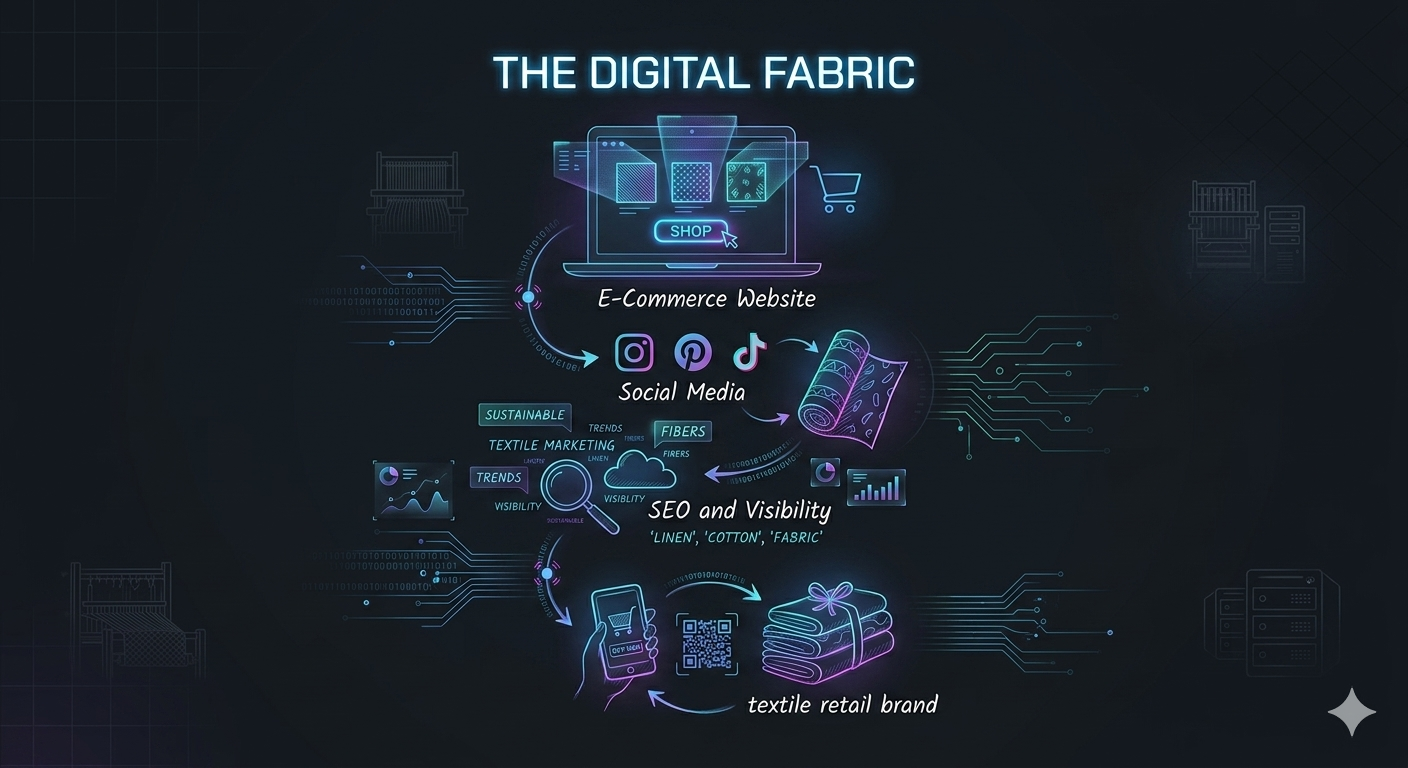
The textile and apparel retail industry is beautifully tactile. For decades, the business relied entirely on the sensory experience: the touch of a premium linen, the weight of a heavy wool, or the vibrant drape of silk under showroom lights.
But the modern consumer browses differently. Today, a fabric’s journey into a customer's closet almost always begins on a screen.
Building a robust digital presence isn't just about survival anymore—it is the single most powerful lever to scale a textile retail business. Here is a deep dive into how a digital footprint transforms a traditional storefront into a global retail powerhouse.
1. The Virtual Showroom: E-Commerce & Websites
Your website is your flagship store in the digital world. Unlike a physical boutique, it has no closing hours, no geographic borders, and infinite shelf space.
The Content Hub Website
Even if you aren't selling directly to consumers yet (B2B textile retailing), a professional website acts as your digital business card. It establishes credibility. A well-designed site should highlight your heritage, fabric sourcing ethics, sustainability certifications, and lookbooks.
The Conversion Machine (E-Commerce)
For B2C retailers, a dedicated e-commerce site (built on platforms like Shopify, WooCommerce, or Magento) converts casual browsers into buyers. However, textiles present a unique challenge: the lack of touch. To overcome this, your e-commerce strategy must rely on high-fidelity digital alternatives:
- Ultra-High-Resolution Photography: Zoom capabilities that reveal the exact weave, thread count, and texture of the fabric.
- Video Integration: Short clips showing how the fabric moves, drapes, and reacts to light.
- Comprehensive Material Specs: Detailed descriptions outlining the weight (GSM), blend percentages, breathability, and care instructions.
2. The Visual Hook: Social Media Marketing
Textiles are inherently visual and aesthetic, making them a perfect fit for social media platforms. Social media shifts your marketing from pushing products to inspiring lifestyles.
[Inspirational Content] ➔ [Community Engagement] ➔ [Instant Commerce]
      (Instagram Reels)          (User Comments)           (Instagram Shop)
Instagram & Pinterest: The Lookbook Platforms
These platforms are non-negotiable for textile retailers.
- Pinterest acts as a giant search engine for mood boards and interior design/fashion inspiration. Pinning your fabrics used in real-world applications (like a beautifully upholstered couch or a custom-tailored suit) captures high-intent buyers early in their decision-making process.
- Instagram allows you to leverage Reels and Stories to show behind-the-scenes content—like the weaving process, new arrivals dropping, or styling tips.
Social Commerce
Features like Instagram Shopping and TikTok Shop bridge the gap between inspiration and purchase. By tagging products directly in your posts, a user can buy a fabric they love in exactly two clicks, completely eliminating friction.
3. Precision Engineering: Targeted Digital Advertising
Traditional billboards and print ads are broad and expensive. Digital advertising allows textile businesses to target micro-niches with surgical precision.
| Advertising Channel | Primary Strength | Best Used For |
|---|---|---|
| Meta Ads (FB/IG) | Visual & Interest-based targeting | Retargeting users who viewed a fabric but didn't buy; targeting fashion designers, boutique owners, or DIY crafters. |
| Google Search (SEM) | High-intent targeting | Capturing buyers actively searching for specific terms (e.g., "organic bamboo fabric wholesale" or "custom silk drapes"). |
| Pinterest Ads | High conversion for home decor/fashion | Reaching users planning major life events, like weddings or home renovations, who need textiles. |
4. Retention & Personalization: Email & SMS Marketing
Acquiring a new customer is expensive; retaining an old one is highly profitable. Textiles often enjoy repeat business, whether it's a designer needing consistent yardage or a consumer updating their seasonal wardrobe.
- The Welcome Sequence: When someone signs up for your newsletter, introduce them to your brand story, offer a small discount, and educate them on your fabric quality.
- Cart Abandonment: Automated emails triggered when someone leaves items in their digital cart can recover up to 10–15% of lost revenue.
- Segmented Campaigns: Segment your list based on behavior. Send quilting cotton updates to your crafters, and heavy-duty upholstery updates to your interior decor clients.
5. Building Trust: Search Engine Optimization (SEO)
When a fashion student or independent designer searches for "best breathable fabrics for summer," your blog or product page should be the first thing they see.
Investing in SEO means creating valuable, evergreen content. By writing detailed guides on fabric care, explaining the differences between Egyptian and Turkish cotton, or detailing how to calculate yardage for curtains, you build authority. Google rewards this utility with free, organic traffic that converts at a remarkably high rate.
The Verdict: The Omnichannel Reality
Developing a digital presence doesn't mean abandoning your brick-and-mortar roots. Instead, it creates an omnichannel ecosystem where the physical store and digital platforms feed into each other. A customer might discover your linen collection on Instagram, read about its sustainability on your website, receive a 10% coupon via email, and ultimately walk into your physical store to make the purchase.
By weaving digital strategies into the fabric of your business, you secure relevance, scale, and a direct line to the modern consumer.