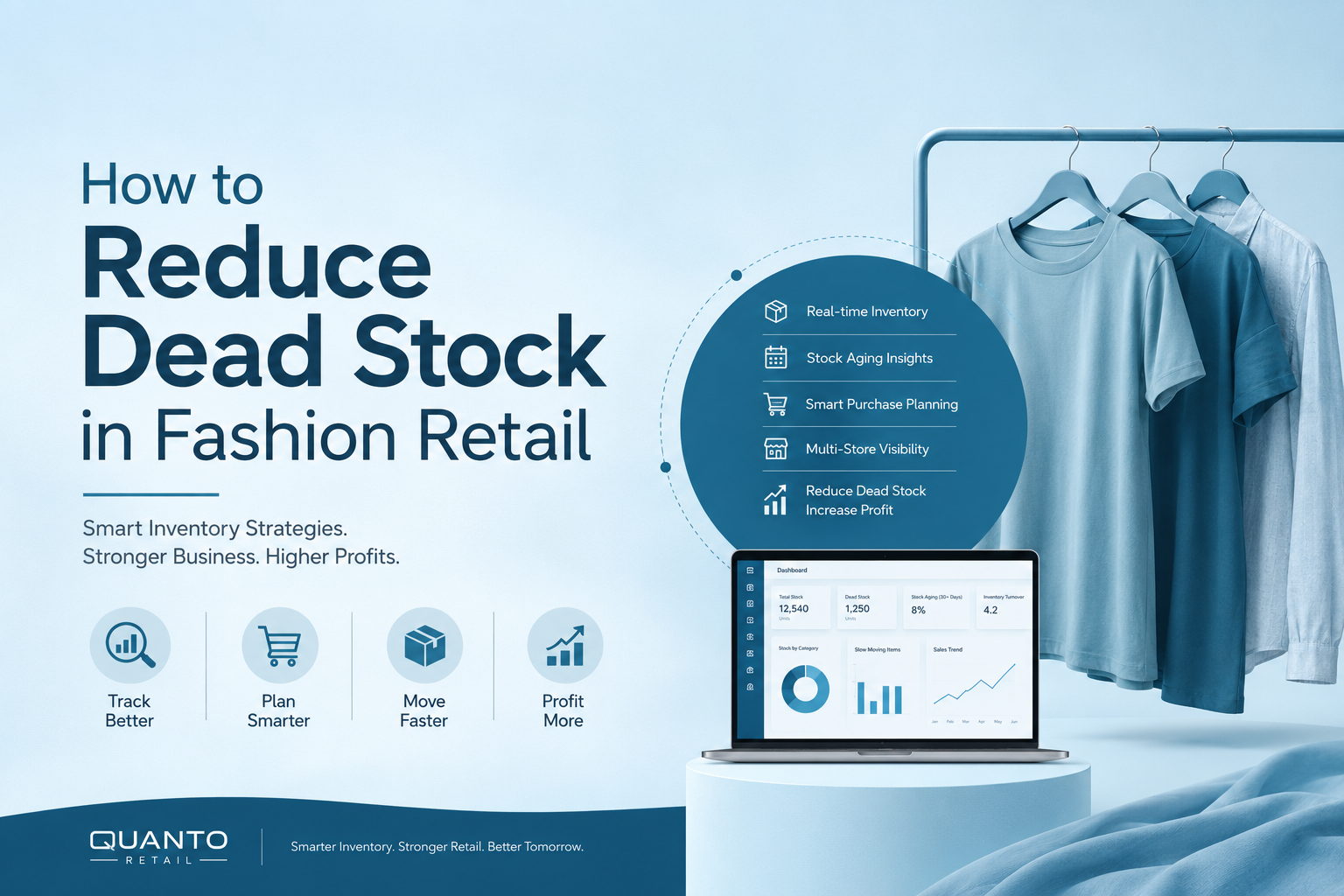
Reduce dead stock in your fashion retail business with smart inventory management. Learn how a Textile ERP helps retailers minimize losses, improve stock turnover, and increase profitability.
Dead Stock is Silently Reducing Your Profits
Dead stock is one of the biggest challenges in fashion retail. It refers to products that remain unsold for a long period, tying up your working capital, occupying shelf space, and eventually forcing you to offer heavy discounts.
Many retailers assume dead stock happens because customers didn't like a product. In reality, it is often caused by poor inventory planning, over-purchasing, and lack of sales visibility.
Why Does Dead Stock Happen?
Here are the most common reasons:
- Buying based on assumptions instead of sales data.
- Overstocking due to supplier discounts or bulk purchase offers.
- Incorrect size and color planning, leading to unsold variants.
- Ignoring slow-moving products until they become difficult to sell.
- Lack of visibility across multiple stores, causing excess stock in one branch while another runs out.
These small mistakes gradually turn healthy inventory into dead stock.
How a Textile ERP Helps Reduce Dead Stock
A modern Textile ERP gives retailers complete control over inventory and helps make smarter business decisions.
Track Slow-Moving Inventory
Identify products that haven't sold for weeks or months before they become dead stock.
Use Sales-Based Purchase Planning
Purchase inventory based on actual sales trends instead of guesswork, reducing unnecessary stock.
Monitor Stock Aging
Stock Aging Reports show how long each item has been in inventory, helping retailers clear aging products before they lose value.
Optimize Multi-Store Inventory
View stock across all branches in real time and transfer products where demand is higher instead of buying new inventory.
Make Better Buying Decisions
Business dashboards provide insights into fast-moving products, slow sellers, inventory turnover, and sales performance, enabling confident purchasing decisions.
Best Practices to Prevent Dead Stock
- Review inventory reports regularly.
- Monitor stock aging every month.
- Purchase based on sales history, not assumptions.
- Transfer stock between stores when needed.
- Run promotions for slow-moving products before they become dead stock.
- Use ERP reports to make data-driven inventory decisions.
Final Thoughts
Dead stock isn't just unsold inventory—it's money sitting on your shelves. The earlier you identify slow-moving products, the easier it is to protect your profits.
By using a powerful Textile ERP with real-time inventory tracking, stock aging reports, and intelligent purchase planning, fashion retailers can reduce dead stock, improve inventory turnover, and keep cash flowing smoothly.
In today's competitive retail market, data-driven inventory management is the key to sustainable growth.